
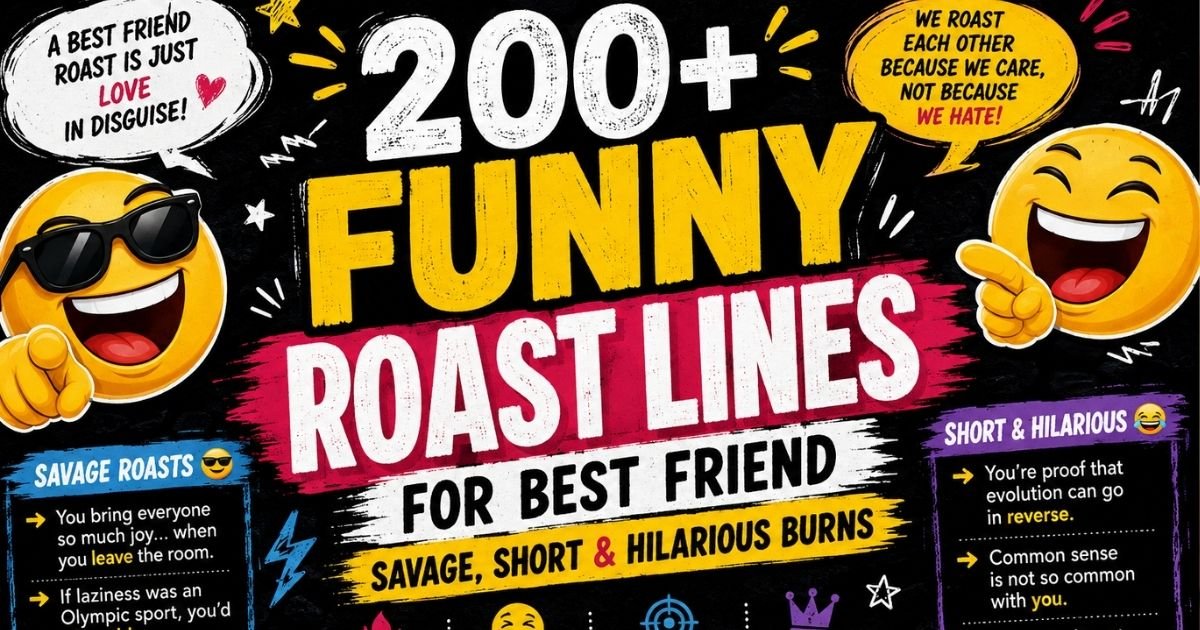
Best friends have a strange talent for turning tiny mistakes into comedy gold. One bad decision can become a running joke for years. The best funny roast lines for best friend feel personal without becoming cruel. They use humor, wit, and a little exaggeration to create that perfect “ouch, that was good” moment.
A great roast isn’t simply an insult with a smile. It combines timing, context, creativity, and a strong punchline. Whether you’re joking in a group chat, posting a birthday caption, or preparing for a friendly roast battle, the right line can create genuine laughter while keeping the friendship intact.
What Makes a Good Roast for Your Best Friend?
The secret behind good roasts that hurt is playful truth. A strong roast notices something familiar, exaggerates it, then delivers an unexpected punchline. That’s why observational humor often beats generic insults. A joke about your friend’s legendary lateness feels sharper because everyone already knows the story.
Just as important, a roast needs the right context and delivery. A joke shared privately may work beautifully, while the same line at a serious family dinner could flop. The goal isn’t a genuine personal attack. Instead, good roasting should create mutual laughter and leave both friends smiling.
Funny vs. genuinely hurtful
Funny roasting usually feels mutual, while hurtful comments create discomfort. Playful insults target harmless habits, funny choices, or exaggerated behavior. Genuine insults often attack sensitive insecurities. When the target stops laughing, the joke has crossed an important line.
Timing, context aur delivery
Great timing can transform an ordinary sentence into one of the best funny burns imaginable. Pause before the final word. Keep your voice relaxed. A confident delivery adds shock factor without requiring harsh language.
Roast ko personal attack banne se kaise bachayein
Focus on situations, habits, and silly decisions rather than sensitive traits. Good humorous insults should feel temporary and playful. Avoid topics involving trauma, serious family problems, disabilities, or deep insecurities. Strong boundaries make friendship humor more enjoyable.
Savage Roasts for Best Friends
When the friendship can handle stronger humor, savage roasts can produce unforgettable moments. The trick is balancing aggression with absurdity. Instead of trying to sound genuinely angry, make the comparison so ridiculous that everyone recognizes the joke. That approach creates sharper savage roast lines without turning the exchange nasty.
For close friends, confidence matters too. A hesitant roast often loses its impact before reaching the final word. Strong roast battle lines work because they sound effortless. Still, the target should understand that the joke comes from affection rather than hostility.
No-mercy one-liners
No-mercy jokes work best when they’re short and unexpected. A good line needs no complicated setup. These roast one-liners can target overconfidence, strange decisions, dramatic reactions, or questionable logic. The shorter the setup, the more important the final word becomes.
Brutal but funny burns
The best brutal roasts aren’t necessarily the cruelest ones. They often use irony, sarcasm, and absurd comparisons. For example, teasing a friend for being late works better when the joke exaggerates their arrival time into a fictional historical event.
Short savage roasts
Short savage comebacks are perfect when your friend starts the exchange first. Keep the response quick and specific. A clever reversal can be more effective than a long insult because it catches the other person before they prepare their response.
Light & Funny Roasts for Best Friend
Not every friendship needs maximum chaos. Sometimes clean roasts create bigger laughs because they rely on wordplay, clever observations, and timing instead of profanity. These jokes work well around parents, coworkers, younger relatives, or friends who prefer gentler humor.
PG-friendly roasts also have another advantage: they age well. A playful joke about someone’s terrible playlist or dramatic coffee order can remain funny months later. This kind of clean humor keeps the mood bright while still giving the conversation some sparkle.
Clean/friendly roasts
Clean jokes can target harmless habits, everyday mistakes, and exaggerated personality traits. These harmless jokes are especially useful when the audience is mixed. They also leave more room for creativity because the punchline can’t depend on offensive language.
Wholesome but hilarious lines
The funniest friendship jokes often contain affection underneath the insult. That’s the charm of friendly roasting. A line can basically say, “You’re ridiculous,” while secretly meaning, “You’re my favorite person to be ridiculous with.”
Playful banter
One person serves a joke. The other returns it. That rhythm creates bestie banter where both people know the rules. The exchange becomes enjoyable because neither person needs to win every round.
Short Roast Lines for Best Friend
Sometimes you don’t need a paragraph. You need a single sentence that lands instantly. Short roast lines for best friend are ideal for texting, comments, captions, and spontaneous conversations. Their strength comes from speed. The reader reaches the final word before expecting the joke to turn.
These lines also work well because modern conversations move quickly. A long setup can disappear inside a busy group chat. Quick comebacks keep the energy alive. When the wording is simple and the comeback feels natural, even a tiny sentence can become a memorable joke.
Quick one-liners
A strong one-liner usually has one clear idea and one surprising ending. Avoid stuffing several jokes together. The cleanest funny punchlines often come from one observation taken to an absurd extreme.
Text-message roasts
Texting allows more creativity because you can use punctuation, spacing, reaction images, and timing. A delayed response can even become part of the joke. Short messages work particularly well when your friend already understands the inside jokes behind them.
Instant comebacks
Instant responses reward confidence. If your friend says something ridiculous, don’t overthink the answer. Turn their statement around or exaggerate it. That simple technique produces sharp comebacks without requiring a complicated script.
Roasts for Your Best Friend’s Habits
Habits provide endless material because they happen repeatedly. The friend who always arrives late eventually becomes a walking clock joke. The friend who takes 47 selfies becomes their own photography department. These familiar patterns create excellent material for friendship humor because everyone recognizes the behavior.
The safest habit-based roasts focus on choices rather than personal vulnerabilities. A friend’s obsession with coffee is fair game when they laugh about it too. Their private struggles may not be. Good teasing should reveal familiarity, not expose something painful.
Lazy friend roasts
Lazy-friend jokes can target procrastination, endless naps, unfinished tasks, and heroic excuses. Exaggeration makes these jokes stronger. Calling someone “professionally committed to doing nothing” is more playful than attacking their character.
Late friend roasts
Late friends practically write their own material. Their famous “five minutes away” message can inspire an entire comedy routine. Compare their arrival time with holidays, geological eras, or fictional time travel. The absurdity keeps the joke light.
Talkative friend roasts
For the friend who never stops talking, exaggerate the storytelling. Their three-minute story becomes a documentary series. Their voice note becomes an audiobook. The key is using humor to highlight a familiar habit without making the person feel unwelcome.
Phone/selfie addict roasts
Phone jokes can target endless scrolling, constant notifications, low battery panic, or taking photos before eating. These situations are familiar to many people. That shared experience gives the roast a natural comic foundation.
Eating/spending habits
Food and shopping can inspire funny observations when handled carefully. Joke about ordering dessert after saying you’re full or buying another item after promising to save money. Avoid comments about body size, eating disorders, poverty, or financial hardship.
Roasts About Looks, Style & Personality
Looks can be tricky territory. The safest approach focuses on choices rather than fixed physical traits. A strange outfit, dramatic selfie pose, or wildly confident fashion decision offers plenty of material. That keeps the joke playful while reducing the chance of genuine embarrassment.
Personality-based humor can work even better. Overconfidence, competitive behavior, dramatic reactions, and “main character” energy are all flexible targets. These clever insults become memorable when they describe a recognizable personality quirk rather than simply calling someone names.
Fashion disaster roasts
Clashing colors, questionable accessories, and unusual outfit combinations can inspire excellent jokes. Compare the outfit to an unexpected profession, fictional character, or bizarre event. The more imaginative the comparison, the stronger the wordplay becomes.
Appearance-related but harmless jokes
Keep appearance jokes focused on temporary choices such as poses, outfits, filters, or photo angles. Avoid weight, medical conditions, racial features, disabilities, or other deeply personal traits. The goal is laughter, not embarrassment.
Ego/personality roasts
An oversized ego makes an easy target for playful humor. Someone who treats a casual game like a championship can inspire exaggerated comparisons. These witty insults work because they poke at behavior rather than identity.
“Your vibe is…” style roasts
The “your vibe is…” format gives you endless possibilities. Compare your friend to a Monday morning, a dying phone battery, an overworked GPS, or a browser with 37 tabs open. This format combines creativity with easy personalization.
Situational Roasts for Best Friends
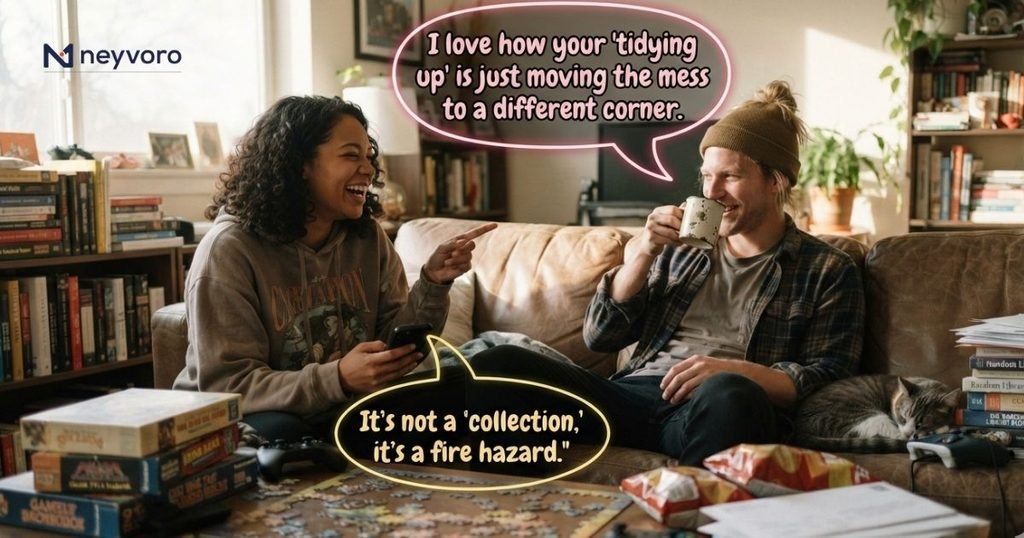
Situational jokes often outperform generic insults because they have a built-in story. A failed recipe, terrible parking attempt, missed deadline, or bizarre purchase already contains comedy. The roast simply adds the final twist. That’s classic observational humor in action.
These moments also create memorable friendship history. Years later, a single phrase can bring back an entire disaster. That is where inside jokes become powerful. A small event turns into shared comic mythology, giving your jokes more meaning than random insults ever could.
Study/academic roasts
Academic roasts can target procrastination, last-minute studying, forgotten assignments, or pretending to understand complicated topics. Keep the jokes about study habits rather than intelligence itself. That distinction makes the humor more playful.
Work/office roasts
Office humor works best when it stays light. Jokes about endless meetings, coffee dependence, mysterious emails, or calendar overload can create laughs without creating workplace drama. Avoid jokes about someone’s job security, salary, protected characteristics, or serious performance issues.
Sports/fitness roasts
Fitness jokes can target skipped workouts, dramatic warmups, gym selfies, or ambitious goals that lasted three days. The funniest angle usually comes from the contrast between confidence and reality.
Money/spending roasts
Shopping habits provide plenty of harmless material. Tease the friend who claims to be saving money before ordering something unnecessary. The joke should target the spending decision rather than actual financial circumstances.
Bad decisions & questionable logic
Questionable logic creates perfect comedy. If a friend develops a five-step plan for something that needs one step, exaggerate the complexity. These jokes work because they transform ordinary confusion into something wonderfully absurd.
“You tried” moments
Failed attempts can become hilarious memories. A disastrous DIY project, terrible cooking experiment, or failed dance move gives you a ready-made setup. Keep the joke focused on the moment rather than turning one mistake into a judgment about the person.
Funny Roast Lines for Social Media & Texts
Social media changes how roasting works. A private joke has a different audience from a public comment. What feels hilarious inside a group chat may look harsh under someone’s Instagram photo. Always consider who can read the joke before posting it.
Short captions and comments benefit from strong punchlines. Long explanations rarely work on social platforms. Birthday posts offer more room for affection, while public comments should generally stay lighter. A good social roast creates engagement without making the target regret posting the photo.
Instagram captions
Instagram captions work best when they combine affection with a quick joke. Birthday photos, vacation pictures, selfies, and friendship snapshots all offer natural setups. A playful caption can celebrate the friendship while still delivering a tiny comedic jab.
Comments
Public comments deserve extra caution. A roast that makes your friend laugh privately could embarrass them publicly. Keep comments focused on obvious, harmless details such as outfits, poses, vacation mishaps, or exaggerated confidence.
Birthday posts
Birthday roasts are classic because celebration creates a naturally playful atmosphere. Mix a sincere compliment with one funny observation. That contrast creates warmth. The joke becomes part of the birthday memory instead of simply becoming an insult.
Group chats
Group chats are perfect for rapid-fire jokes. Reactions, screenshots, and running jokes create natural openings. Still, remember that the entire group can see the exchange. Keep the banter mutual and avoid turning one person into the permanent target.
Snapchat/DM-style roasts
Private messages allow more personalized humor because the context is clearer. Use shared memories, recent mistakes, and familiar habits. A simple line can become hilarious when both people know the backstory.
How to Roast Your Best Friend Without Going Too Far
The strongest roast isn’t the cruelest one. It’s the one that makes the target laugh while everyone else enjoys the moment. That requires consent, awareness, and emotional intelligence. A close friendship doesn’t automatically make every subject acceptable. Familiarity should improve your judgment rather than remove it.
Think of roasting like seasoning food. A little adds flavor. Too much ruins the meal. Pay attention to the reaction after the joke. If your friend laughs and fires back, the exchange is probably healthy. If they become quiet or uncomfortable, stop. Good roast culture knows when enough is enough.
Know your friend’s boundaries
Every friendship has unwritten rules. Some friends enjoy savage humor. Others prefer gentle teasing. Respect those differences. Boundaries aren’t the enemy of comedy. They help create the space where jokes remain genuinely enjoyable.
Roast the situation, not sensitive traits
A person’s bad parking job is a situation. Their deepest insecurity isn’t. Focus on actions, habits, choices, and funny circumstances. This approach keeps playful teasing entertaining while reducing the risk of genuine emotional harm.
Read the mood
Mood changes everything. A joke that works during a relaxed weekend may fail during a stressful day. Pay attention to facial expressions, tone, and silence. If the audience or target seems uncomfortable, change direction.
Roasting vs. bullying
The difference between roasting and bullying often comes down to mutual participation. Roasting involves shared banter, laughter, and the ability to stop. Bullying repeatedly targets someone without meaningful consent. Healthy friendship humor should never depend on humiliation.
| Roasting | Bullying |
| Mutual and playful | One-sided and unwanted |
| Creates laughter | Creates distress |
| Uses harmless situations | Targets vulnerabilities |
| Both people can respond | One person dominates |
| Stops when asked | Continues despite discomfort |
| Builds connection | Damages relationships |
How to recover if a joke goes too far
Sometimes even careful jokes miss their mark. Don’t hide behind “I’m just kidding.” A sincere apology works better. Acknowledge the specific comment, recognize the impact, and move forward without demanding immediate forgiveness. That response shows maturity and protects the relationship.
FAQs
What are good roasts that hurt?
The best good roasts that hurt use clever observations rather than genuine cruelty. They sting the ego for a moment while keeping the relationship safe. Strong timing, wit, surprise, and playful exaggeration usually matter more than harsh language.
What makes a roast funny and painful at the same time?
A good roast combines truth with surprise. The audience recognizes the observation, but the wording takes it somewhere unexpected. That mixture creates shock factor without requiring offensive material. The strongest jokes make people laugh because the comparison feels strangely accurate.
How do you make a funny roast?
Start with something specific about the person. Add exaggeration, a surprising comparison, or sarcasm. Then finish with a concise punchline. Avoid generic insults because they rarely contain enough creativity to stand out.
Are savage roasts okay between best friends?
They can be, provided both people genuinely enjoy that style. Savage humor works best when the friendship already includes reciprocal teasing. If one person regularly feels targeted, the exchange isn’t healthy banter anymore.
How can you roast your friend without hurting their feelings?
Choose harmless habits, silly mistakes, fashion choices, or funny situations. Avoid sensitive subjects and watch the person’s reaction. If the joke stops producing laughter, don’t keep pushing. Knowing when to stop is part of being a good roaster.
What is the difference between roasting and bullying?
Roasting is mutual, temporary, and playful. Bullying is unwanted and often repetitive. A healthy comeback can move in either direction because both people have room to respond. Bullying removes that balance and often relies on embarrassment or social pressure.
What are the best short roast lines for texting?
The best text roasts are quick, recognizable, and easy to understand without explanation. Use a familiar habit, add a clever twist, and finish quickly. Funny comebacks work especially well in texts because they keep the conversation moving rather than stopping it.
Final Thoughts on Best Friend Roasts
The best funny roast lines for best friend aren’t really about being mean. They’re about knowing someone well enough to spot the tiny habits that make them wonderfully ridiculous. A great roast turns an ordinary moment into a shared memory through humor, creativity, and perfect timing.

Welcome to Neyvoro. I’m Hafsa Habib, an AI-Powered SEO, and content writer with 2 years of experience. I help websites rank higher, grow traffic and look amazing. My goal is to make SEO and web design simple and effective for everyone. Let’s achieve more together!
Leave a Reply